
1Why it is free (and where the catch is)
Let us start with what usually gets hidden. The website is not a separate product we give away to hook you: it is the public face of the CRM. Since your portfolio is already inside, publishing it on your own site costs us almost nothing, and it ties you to the product far more than any discount would. That is the model, plainly put.
What you do have to provide are two things that do not depend on us: a domain (around €10-12 a year) and WordPress hosting (from about €3-5 a month, or whatever you already have). We do not charge a fee for the website or the design, but it would be dishonest to claim a website costs absolutely nothing.
2What the website includes
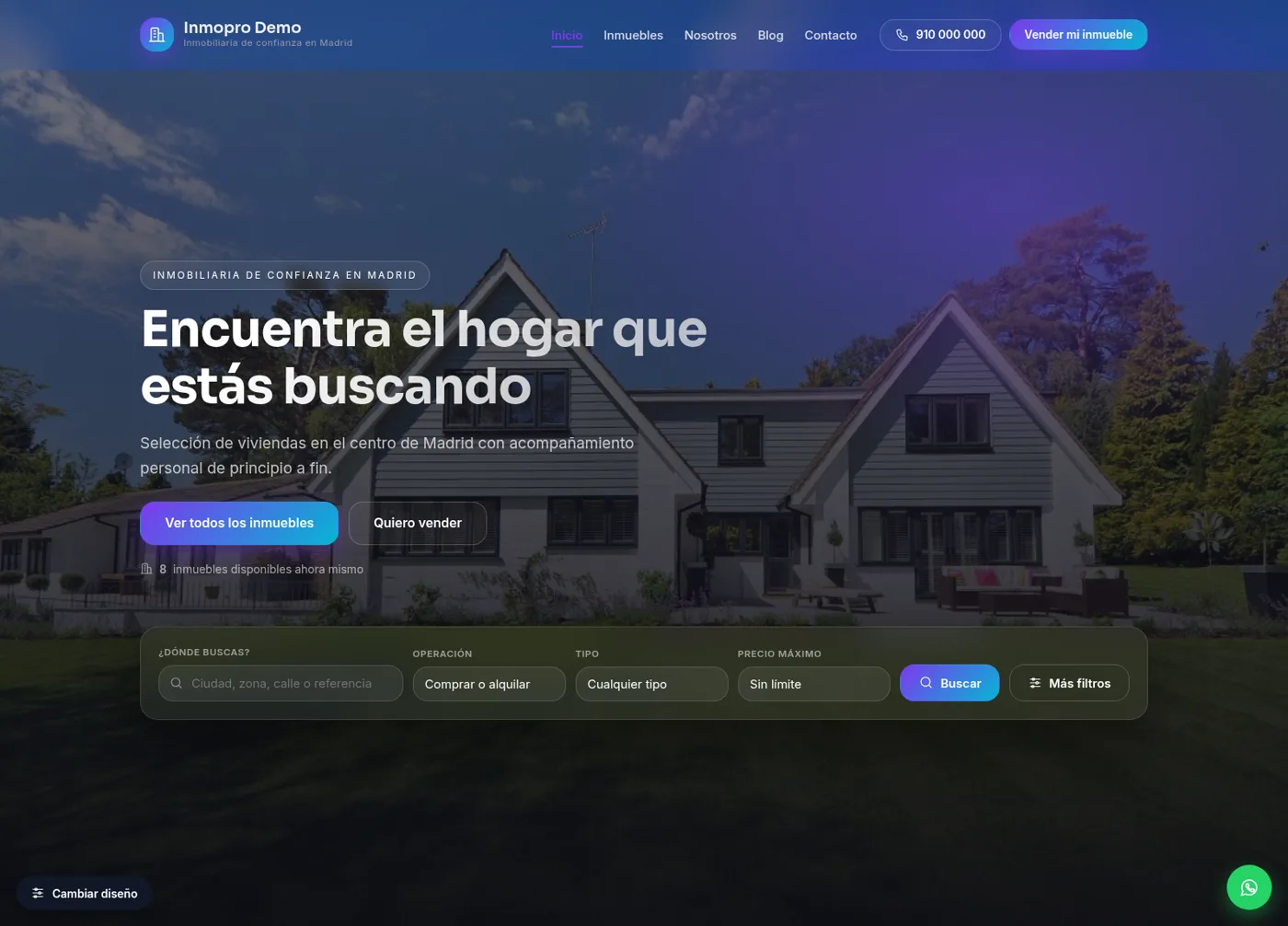
It is not a generic template where you swap the photos: the shop window is generated by the plugin from your portfolio, so the listing pages have the structure a property portal expects and Google understands.
- Property search with filters by area, type, price and bedrooms
- A page per home with gallery, map, features and enquiry form
- Five different designs, from the most sober to the most visual
- Your logo, your colours and your typography
- Separate sales, rentals and new-build pages
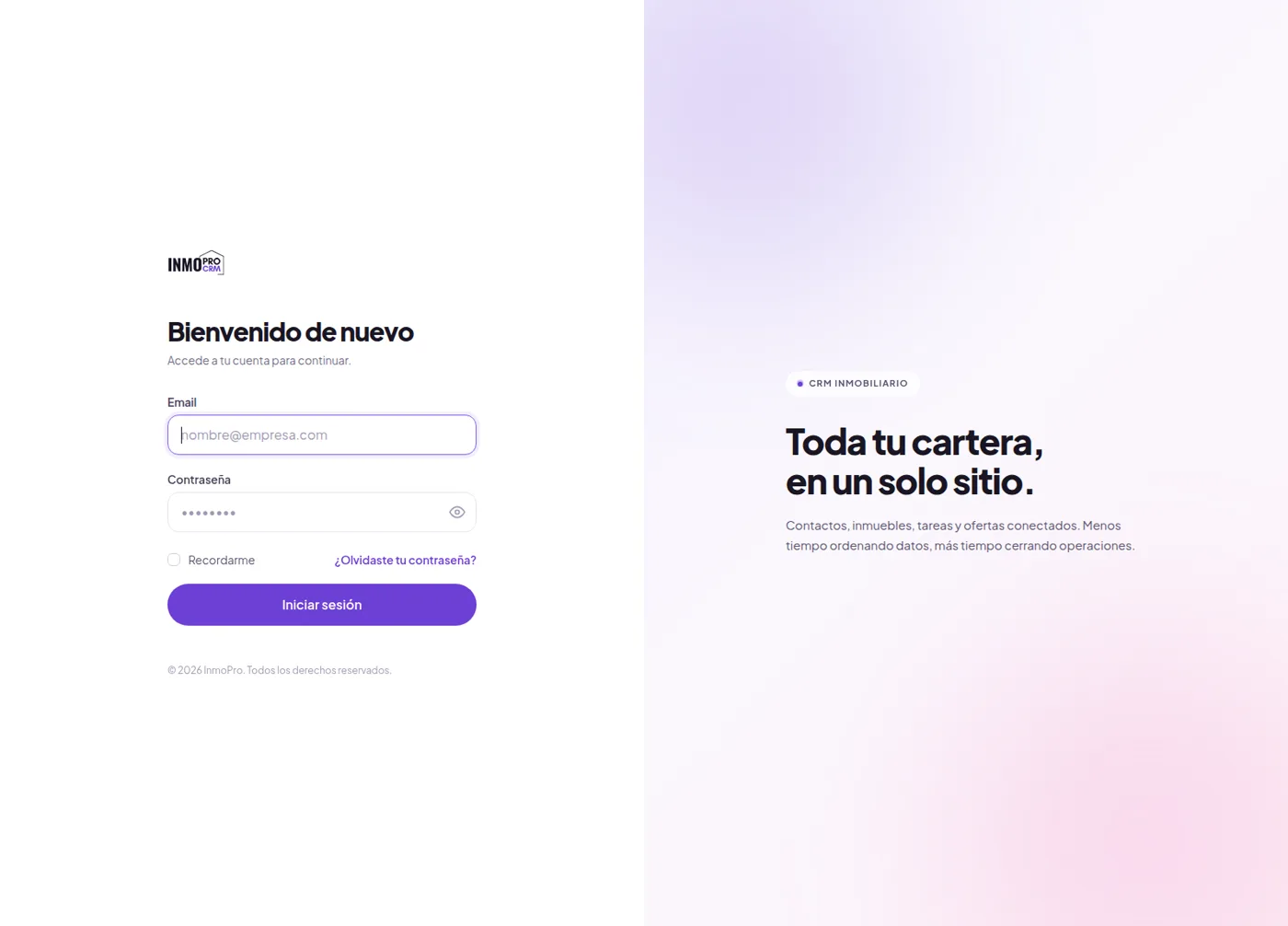
- Forms that land straight in the CRM, no copy and paste
- Ready for mobile and for search engines
3It updates itself: that is the point
Here is the real difference from commissioning a website separately. When you lower a price in the CRM, it drops on the website. When you sell, it disappears from the shop window. When you list, it appears. There is nothing to remember and, above all, no two inventories contradicting each other, which is what always ends up happening.
And in the other direction: whoever fills in your website form enters the CRM as a contact, with their lead score and their auto-reply if you have it switched on. A contact arriving through your own site does not cost you per lead, unlike the portals.
4Compared with the alternatives
Commissioning a website from an agency costs between €1,200 and €3,000 and takes weeks, and it still is not connected to your portfolio: someone will have to upload the properties by hand. A €60 template solves the looks but not the inventory, and three months later you have sold listings still published. The microsite the portal gives you is convenient, but it is not yours: the domain, the rankings and the contacts stay there.
The website included with the CRM is not the prettiest on the market and does not try to be. It is the one that maintains itself and the one that does not charge you per enquiry.
5How to set it up
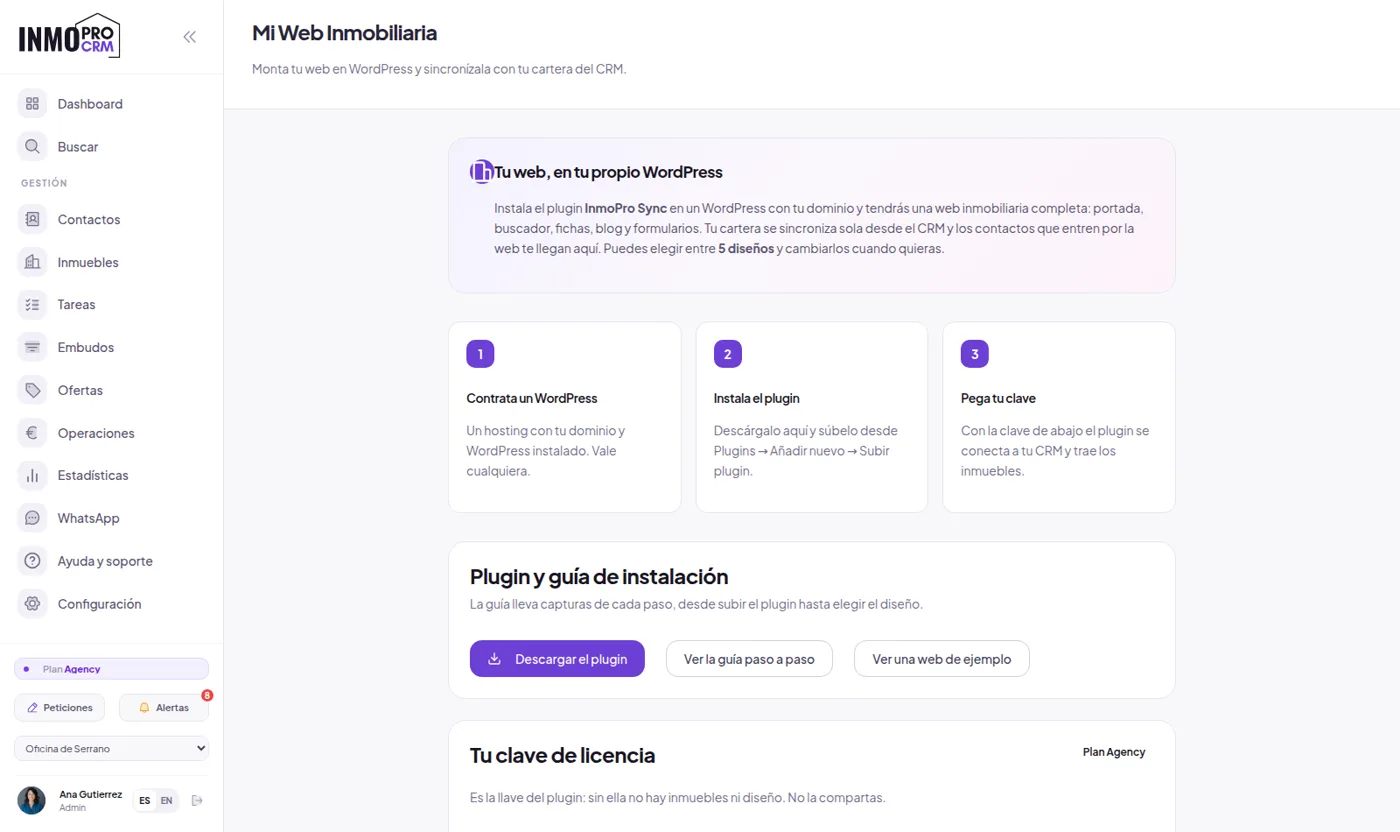
Three steps: open the free CRM account, install the InmoPro Sync plugin on your WordPress and paste your key. From there you pick a design and your portfolio appears published. It takes between thirty and forty-five minutes with no coding knowledge.
The full step-by-step, with eleven screenshots of every screen, is in the guide: inmoprocrm.com/guia-web-inmobiliaria. This page tells you what you get; the guide tells you how to do it.
6Built so Google understands it
An estate agency website has a problem others do not: hundreds of pages appearing and disappearing as things sell. Handled badly, you end up with sold listings indexed for months and broken links everywhere, which is what sinks the rankings of most sites in the sector.
The plugin generates each listing with its title, description and structured property data, keeps the sitemap up to date and handles what happens when a home sells, instead of leaving a 404. Images are served optimised, which is the heaviest part of any site with galleries.
7Sales, rentals and new builds separately
Someone looking to buy is not the same as someone looking to rent, and putting them in one list forces the visitor to filter before seeing anything. The website separates operation types into their own pages, which is also what lets you rank for "flats to rent in your city" instead of having one generic page competing for everything at once.
Each area you work in can have its own page, and that is the realistic way to compete with the portals: they win the general searches, but an agency with twenty flats in one neighbourhood can win that neighbourhood.
8The three mistakes that keep repeating
The first is an out-of-date website. A visitor calling about a flat sold two months ago does not come back, and wastes your time on top. It fixes itself when the website feeds from the CRM.
The second is a form going to an inbox nobody checks. A contact from your own website is the most valuable one you will get, because it cost you nothing per lead: letting it die in a shared inbox is throwing money away. Here it goes straight into the CRM, scored and with an auto-reply.
The third is building the site once and never touching it again. Since here the content is generated by your portfolio, the site changes every time you list or sell, which is exactly the activity signal Google rewards.
Keep reading
- Guide: build the website step by step — the eleven steps with a screenshot of every screen
- Software for estate agencies — the CRM the website feeds from
- Real estate CRM for WordPress — the WordPress angle: plugin, not a closed platform
- Real estate CRM with AI — how website enquiries are scored and answered
Build your website this afternoon
Open the free account, install the plugin on your WordPress and paste your key. The step-by-step guide is at inmoprocrm.com/guia-web-inmobiliaria.

